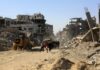
The latest Iran war reporting shows the Pentagon quietly kept dozens of wounded U.S. troops off the public books, deepening fears that Washington’s leaders are hiding the real human cost of this conflict.
Story Snapshot
- Over 400 U.S. service members have been injured in the Iran war, but dozens of recent wounds were never publicly reported when they happened.
- Pentagon officials say rules do not require them to disclose injuries when troops quickly return to duty, especially if there is no loss of life, limb, or eyesight.
- Families and wounded soldiers now accuse the military of downplaying traumatic brain injuries and hiding the true toll, while media outlets talk openly about a “casualty cover‑up.”
- A former Trump administration official says the White House pushed to change casualty reporting after an earlier Iranian missile strike to avoid negative press.
What The New Reporting Says About Hidden Injuries
The New York Times now reports that the Pentagon did not disclose dozens of injuries from three Iranian strikes last week, even though U.S. commanders had that information at the time. Anonymous American military officials told the paper that United States Central Command, which runs the war, is not required to publish casualty information when wounded troops quickly return to duty. The result is a public tally that leaves out many concussions and other non‑fatal wounds, even while this war continues to escalate.
Central Command has said that more than 400 American service members have been hurt in the broader Iran conflict, yet the Pentagon’s own public briefings highlighted only 140 wounded during one intense 10‑day stretch and did not mention several earlier strikes that also caused injuries. Pentagon spokesperson Sean Parnell stated that “the vast majority of these injuries have been minor” and noted that 108 troops had already returned to duty, while eight remained severely injured. This careful language shapes how the public views the war’s impact even when many more troops are suffering.
How Pentagon Rules Allow Quiet Injury Reporting
Pentagon officials defend the limited disclosures by pointing to existing military rules. Spokesperson Jonathan Hoffman previously explained that communication to Defense Secretary Mark Esper followed protocols that do not require notifying top Pentagon leaders about service member casualties unless there is a loss of life, limb, or eyesight. In practice, that means a serious concussion or traumatic brain injury can be treated as “minor” from a reporting standpoint if the soldier is expected to survive and may eventually return to duty.
Central Command’s stance that it is not required to publish casualty information when wounded personnel quickly go back to their units fits a long pattern of selective reporting of non‑fatal injuries. Across earlier wars, military officials often delayed or narrowed public casualty data, citing operational security or technical definitions of who counts as “wounded.” Those same dynamics are now playing out in the Iran war, where official numbers focus on deaths and the most severe cases, while head injuries and short‑term evacuations get far less attention.
From ‘No Injuries’ To Rising Brain Injury Counts
This story also echoes what happened after Iran’s missile attack on an Iraqi base in early 2020. Then‑President Trump initially claimed that “no one was hurt,” but the Pentagon later admitted that 11 service members had been flown to medical centers for concussion symptoms. In the weeks that followed, the count climbed from 34 troops diagnosed with concussions and traumatic brain injuries to 50, and later to 110 mild traumatic brain injuries — all from that single strike. Each revision showed that early public statements had understated the true medical picture.
Defense One reported that Defense Secretary Esper ordered a review of how injuries are tracked and reported after those 2020 criticisms, signaling that leaders knew the system was failing to capture and share non‑fatal wounds clearly. Yet today’s revelations suggest that the culture of minimizing or delaying injury disclosures never really went away. Instead, it appears to have been carried into the Iran war, where new strikes and new wounded troops are again being counted quietly inside databases, not openly explained to the American people.
Accusations Of Downplaying Injuries And Political Pressure
As more details come out, wounded soldiers and families are speaking up. In recent interviews, survivors of the Iranian drone strike on a U.S. base in Kuwait said they “absolutely” believe the Pentagon tried to downplay what happened to them. One Army spouse recalled being told that her husband was “not seriously injured,” a claim she disputes based on his ongoing symptoms. These firsthand stories feed a growing sense among both conservatives and liberals that military leaders protect the institution first and the rank‑and‑file last.
The Pentagon has been slow to disclose injuries to US troops during the ongoing war with Iran, avoiding publicly confirming the fallout from Iranian attacks and mostly reserving totals to a military website that lags events by several days or even weeks pic.twitter.com/RQG3LvVjDp
— sanswant (@royal_bobby24) July 21, 2026
The political stakes are also clear. A former Trump administration official told Business Insider that the White House pushed the Pentagon to change how it reported casualties after the 2020 Iranian missile attack because leaders feared negative press. Today, major outlets like The New York Times and ABC News describe the current withholding of injury details as a “break from long‑standing transparency norms” and even a “cover‑up,” while independent investigators claim hundreds of casualties are missing from public records. For many Americans on both the right and the left, this looks less like “America First” or “human rights,” and more like a government protecting its own image while the real human costs of war stay hidden.
Sources:
mediaite.com, nytimes.com, abcnews.com, youtube.com, aljazeera.com, pbs.org, timesofisrael.com, factcheck.org, defenseone.com, telesurenglish.net, businessinsider.com, esd.whs.mil