The biggest controversy over a New York parade this year is not about the Navy at all.
Story Snapshot
- New York City Mayor Zohran Mamdani skipped the long‑running Israel Day Parade, breaking a decades‑old tradition.
- A partisan outlet then claimed he “sabotaged” a massive United States Navy parade, even though no such Navy event is documented.
- Mainstream reports and city statements only mention the Israel Day Parade on Fifth Avenue, not any Navy parade.
- The clash shows how modern media can twist one boycott into a story about “attacking the military.”
A boycott that broke a 60‑year habit
New York City’s Israel Day Parade has run along Fifth Avenue since the 1960s, drawing tens of thousands of marchers, floats, and elected officials each year. For more than six decades, one thing stayed constant: the sitting mayor showed up and marched. This year, Mayor Zohran Mamdani broke that pattern. He announced during his campaign that he would not attend and kept that promise once in office, turning a routine tradition into a national headline.
Mamdani explained his choice in clear political terms. He said he opposes the current Israeli government and did not want his presence used as a photo‑op that suggests he supports its policies. That stance lined up with his long‑stated sympathy for Palestinian rights, but it set him apart from other New York leaders. The governor, members of Congress, and many local officials still marched, eager to show support for Jewish New Yorkers during a year of rising antisemitism.
Security support without personal participation
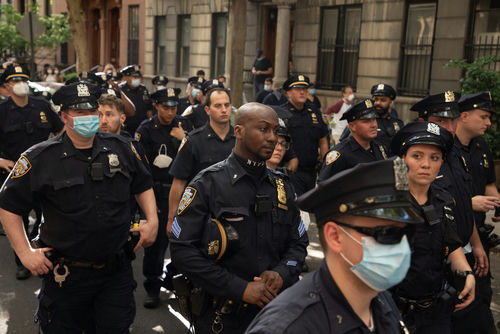
Critics accused Mamdani of snubbing the Jewish community, but his administration did not treat the parade as an enemy event. City agencies granted permits, closed streets, and coordinated logistics, as they do for every large march on Fifth Avenue. The mayor’s security plan included extra police officers, screening checkpoints, and specialized counterterrorism units along the route to protect both marchers and spectators, even as he chose to stay away himself.
That split approach — strong institutional support, personal boycott — is unusual but not unheard of in American politics. Conservative readers will recognize the core trade‑off: Mamdani used his own body, not the power of the state, to signal his stand. Whether one agrees with his views on Israel, the facts show a clear line between his policy duty to protect the event and his individual decision about where to march.
From Israel Day Parade to “US Navy parade”
Into this already heated scene stepped a new claim: that Mamdani had somehow “gutted” or “sabotaged” the biggest United States Navy parade in 50 years. The headline came from a right‑leaning site that often frames Democratic officials as hostile to the military. The problem is simple and stark. Every verified report describes the parade at issue as the Israel Day Parade, not a Navy event. The date, the route, the footage, and the angry quotes all refer to the same Jewish community march.
No mainstream story, no city statement, and no United States Navy release mentions a giant Navy parade in New York City this year, much less one that Mamdani undercut. Coverage from large outlets in the United States and abroad all centers on his absence from the Israel Day Parade, his campaign promise, and the blowback from Jewish groups and some members of Congress. If a once‑in‑50‑years Navy spectacle had been chopped down, Navy officials and veterans would be shouting about it. They are not.
Why “sabotage” stories spread so fast
This is where the pattern becomes clear. In modern politics, accusations of “sabotage” carry more punch than a simple boycott. Activists on both left and right know many voters see the military as sacred. So if skipping a parade about Israel does not sound shocking enough, the story shifts: now it is about crippling a Navy celebration. It turns a foreign policy protest into a supposed attack on American strength and patriotism, without new facts to back that jump up.
Researchers who study misinformation have shown that people who consume more partisan “fake news” tend to lose trust in normal media and lean harder into whatever outlet matches their side. That feedback loop rewards headlines that are louder, angrier, and less careful about details. In this case, swapping “Israel Day Parade” for “US Navy parade” changes the emotional charge of the story while leaving the underlying reality untouched. The spectacle matters more than the specifics.
What conservative common sense sees here
American conservative values usually stress a few core ideas: respect for the military, honesty from leaders, and clear lines between personal conviction and public duty. On the hard facts, Mamdani met one of those tests and flunked another. He honored his duty to secure a major parade he did not like. At the same time, many conservatives see his boycott of a key Jewish community event as divisive in a city scarred by antisemitic attacks.
The “Navy parade sabotage” claim, though, does not pass a basic smell test. No Navy parade appears in official records. No organizer reports meddling from City Hall. The only concrete event here is Mamdani’s very public choice to stay away from the Israel Day Parade — and the equally public decision by some media voices to relabel that fight as something far more explosive. For readers trying to make sense of modern politics, this story is a reminder: check which parade you are being told to be angry about.
Sources:
redstate.com, thehill.com, youtube.com, nbcnewyork.com, abc7ny.com, pix11.com, apnews.com, facebook.com, eipartnership.net