
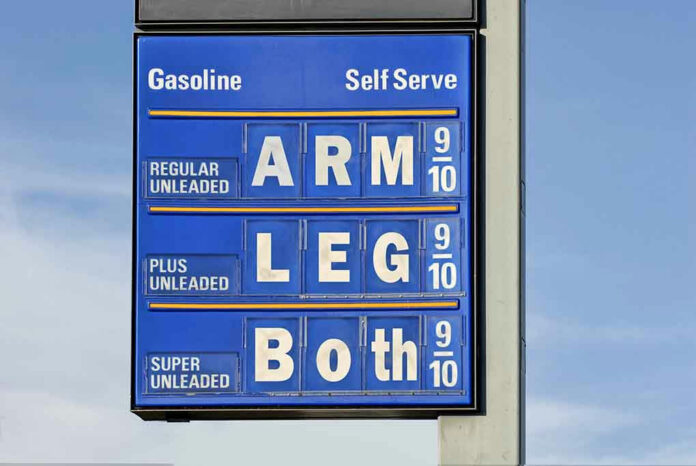
An oil executive’s warning that prices could “soar” as reserves dwindle is a flashing red light for American families still paying the price for years of anti-energy, anti-drilling policy.
Story Snapshot
- Oil executives and analysts say the world is drawing down prewar crude supplies and emergency stockpiles, shifting into a shortage regime that can drive prices sharply higher.[1]
- Global and United States reserves have been declining at a record pace, limiting America’s ability to cushion future shocks, especially with persistent conflict near the Strait of Hormuz.[1][2]
- A major oil company leader has warned crude could spike toward $160 a barrel as inventories sit near record lows, putting serious pressure on gasoline, diesel, and heating costs.[3][2]
- Long‑term reserve data show enormous remaining resources, but experts say much of today’s pain comes from policy‑driven underinvestment and overuse of strategic stockpiles, not literal depletion.[5]
Oil Executive Sounds Alarm As Inventories Fall And Conflict Rages
Reports quoting oil executives describe a market that has shifted from relative comfort into what they call a “shortage regime,” as nations burn through prewar crude inventories and emergency releases from dozens of countries.[1] A widely cited industry CEO recently warned that oil prices could climb toward one hundred sixty dollars per barrel within weeks, pointing to already near record low stockpiles as a key driver.[3][2] These warnings come as shipping disruptions and military tensions near the Strait of Hormuz restrict tanker traffic and chill transit out of the Persian Gulf, constraining supply routes critical to global flows.[3]
Energy analysts and the International Energy Agency have highlighted a sharp decline in reserves, with one report citing a record drop of hundreds of millions of barrels from global stocks in a single year.[2] United States media coverage has underscored that the Strategic Petroleum Reserve, originally designed as a once‑in‑a‑generation emergency buffer, has been drawn down at a pace that alarms energy security experts.[1] Commentators warn that continued depletion of this reserve, combined with conflict‑related disruptions in the Middle East, could leave America with less flexibility to respond when the next major supply shock hits.[1]
An oil executive warned on Thursday that global oil prices may soar even higher as reserves dwindle. ExxonMobil Senior Vice President Neil Chapman delivered remarks on global energy markets at the Bernstein 42nd Annual Strategic Decisions Conference in New York. Chapman predicted…
— Common Sense with Chad Law (@chadparkerlaw) May 29, 2026
Are We Running Out Of Oil Or Paying For Years Of Bad Policy?
Some public debate has tried to turn these warnings into a story of imminent global exhaustion, but the facts are more complicated and more frustrating. Long‑range studies from institutions such as the Baker Institute note that earlier predictions of a near‑term global production peak did not materialize on schedule, largely because technology, investment, and new regions expanded supply beyond expectations.[4] Global statistics still show roughly one point seven trillion barrels of proven oil reserves, an amount equal to more than forty times current annual consumption, although actual future output depends heavily on investment, regulation, and access. That means families are not facing higher pump prices because the world has suddenly “run dry,” but because governments and corporate leaders have choked off timely production, refining upgrades, and infrastructure while leaning on emergency stockpiles as a political pressure valve.
Major producers themselves acknowledge that public reserve figures do not tell the whole story, distinguishing between narrow “proved reserves” and a broader “resource base” that includes quantities not yet classified as proved.[5] This technical language undercuts simple catastrophe narratives about tomorrow’s oil suddenly disappearing, while still admitting that maintaining output requires constant reinvestment, exploration, and development.[5] The United Kingdom Energy Research Centre has warned that decline rates in existing oil fields are accelerating, estimating that more than two thirds of current capacity may need replacement by two thousand thirty just to stand still, underscoring the cost of underinvestment. When policymakers layer aggressive climate mandates and permitting roadblocks on top of natural decline, they effectively engineer scarcity, leaving ordinary Americans exposed to every geopolitical shock and shipping disruption.
What This Means For American Families Under Today’s Energy Policy
Federal data show global oil inventories projected to fall by millions of barrels per day this quarter, with benchmark Brent crude expected to average over one hundred dollars per barrel as stocks tighten. Past experience with tapping strategic reserves shows that such releases may nudge prices temporarily but cannot overcome the basic math of a nation that burns roughly twenty million barrels of oil every day. As exports surge to record levels and reserves stay low, American families face higher gasoline, diesel, and heating bills that function like a hidden tax on work, commuting, and food prices throughout the supply chain.[2] Analysts warn that, without a shift back toward stable domestic production, reliable pipeline infrastructure, and a disciplined policy of refilling the Strategic Petroleum Reserve, each new crisis from the Middle East to global shipping lanes will translate quickly into pain at the pump and in household budgets.[1]
Long‑running studies on predicting so‑called “peak oil” remind us that the world has repeatedly out‑innovated the doomsday forecasts, but only when governments allowed producers to invest and build.[4] The collapse in oil prices between two thousand fourteen and two thousand sixteen, driven by a supply glut, also illustrated how rapidly markets can swing when policy and investment align with expanding output rather than restricting it. For Americans who value energy independence and limited government, the latest warnings from oil executives are less a prophecy of inevitable shortage and more a verdict on years of political choices that sidelined affordable domestic energy. How quickly families see relief will depend on whether current leaders double down on scarcity or restore an environment where American energy can do what it does best: supply the world and shield this country from foreign chaos.
Sources:
[1] Web – Oil Executive Issues Stark Warning To US Consumers
[2] Web – Oil Executives Warn Trump of Price Surge Lasting Months – TT
[3] Web – Crude Oil Prices Today | OilPrice.com
[4] Web – Supermajor Warns Oil Prices Could Hit $160 Within Weeks
[5] YouTube – Oil Prices Surge Worldwide – What You Need To Know