
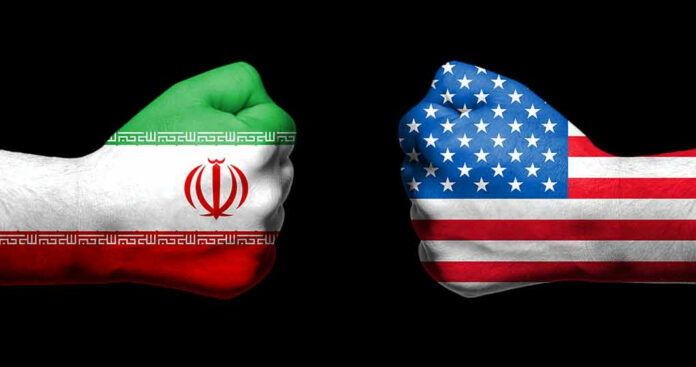
Trump’s Iran campaign has entered a critical and murky phase — with military strikes already launched, ceasefire talks fragile, and the Strait of Hormuz hanging in the balance, the question of whether the administration is winning or stumbling demands a clear-eyed look at what the record actually shows.
Story Snapshot
- Trump launched strikes against Iran’s nuclear infrastructure, then threatened to expand attacks to power plants, bridges, oil facilities, and Kharg Island if Tehran refused to negotiate.
- A Pakistan-brokered ceasefire was under active consideration, but Iran’s foreign ministry declared that ultimatums and military threats are incompatible with diplomacy.
- Iran’s Islamic Revolutionary Guard Corps vowed major retaliation for the death of a senior general, while Iranian armed forces threatened strikes on U.S. assets across the region.
- Trump described the initial strikes as a “love tap,” put further infrastructure attacks on a five-day hold, and said odds of a deal versus devastating escalation stood at roughly 50-50.
What the Strikes Actually Accomplished — and What They Didn’t
The initial U.S. air campaign targeted Iran’s nuclear program, but no official bomb-damage assessment has been made public confirming how much of that program was destroyed or degraded. Without verified data from the Defense Intelligence Agency, the International Atomic Energy Agency, or U.S. Central Command, it is impossible to say with certainty whether the first strike package achieved its core objective. That evidentiary gap matters enormously, because every subsequent decision — to escalate, pause, or negotiate — rests on what the first wave actually accomplished. [3]
What is documented is that Trump publicly described the strikes as a “love tap” while simultaneously threatening to destroy Iran’s “whole civilization” and strike energy plants, oil wells, and Kharg Island. The Council on Foreign Relations’ conflict tracker recorded this pattern of alternating between diplomatic optimism and escalation threats, a dynamic that can read either as sophisticated coercive pressure or as strategic inconsistency depending on what the classified operational picture shows. [3]
Escalation Threats, Ceasefire Talks, and a Fragile Diplomatic Window
CBS News reported that Trump set deadlines for Iran while considering a Pakistani proposal for a 45-day ceasefire — a proposal the White House said Trump had not endorsed but was actively weighing. Simultaneously, CNN-News18 reported Trump had been “only an hour away” from ordering additional strikes earlier in the week before pulling back after Gulf states urged more time for negotiations. That sequence shows military pressure and diplomacy operating in parallel, which is consistent with coercive strategy — but also with improvisation. [1] [5]
Iran’s foreign ministry spokesman responded to Trump’s infrastructure threats by calling them potential war crimes and stating that “negotiation can in no way be compatible with ultimatums, crimes, or threats to commit war crimes.” Those are adversarial statements from a self-interested party, not neutral assessments, and should be weighed accordingly. But they do confirm that Iran perceived the escalation as operationally meaningful rather than symbolic posturing — which cuts both ways in evaluating whether the pressure campaign was working. [1]
The Strait of Hormuz and the Limits of the Available Record
Iran threatened to close the Strait of Hormuz if Trump followed through on striking power plants — a threat that would affect roughly 20 percent of global oil supply and send energy prices sharply higher. Senator Roger Wicker publicly called on U.S. forces to “finish the destruction of Iran’s conventional military capabilities and reopen the strait,” framing escalation as a strategic necessity rather than overreach. Regional reporting also described drone incidents affecting Saudi airspace and the United Arab Emirates near the Barakah nuclear facility, suggesting the broader conflict environment was already expanding beyond the initial U.S.-Iran exchange. [3] [5]
🚨 IRAN SENDS CHILLING WARNING TO TRUMP
🇮🇷 Tehran reportedly warned that any move to attack or fully blockade the Strait of Hormuz could trigger a dramatic escalation — including breaking the blockade by force and reconsidering its membership in the Nuclear Non-Proliferation… pic.twitter.com/TAxmiIBsTW
— Global War Desk (@GlobalNewsHQI) May 24, 2026
The honest assessment of where things stand is this: the public record documents escalation, counter-threats, fragile ceasefire efforts, and a 50-50 odds statement from Trump himself — but it does not yet contain the primary-source documents needed to render a final verdict. No declassified strike assessments, no NSC decision memos, no IAEA enrichment data, and no diplomatic cable record have been released. The administration’s strategy may prove to have been effective coercive pressure that forced Iran to the table, or it may prove to have widened a conflict that limited strikes alone could have contained. That determination requires evidence that has not yet reached the public domain. [1] [3] [6]
Sources:
[1] Web – Trump warns of “critical period” in Iran war, threatening severe …
[3] Web – Iran’s War With Israel and the United States | Global Conflict Tracker
[5] YouTube – LIVE: Trump Says US Delayed Iran Strikes After Saudi, Qatar, UAE …
[6] Web – Trump threatens ‘completely obliterating’ Iranian …