
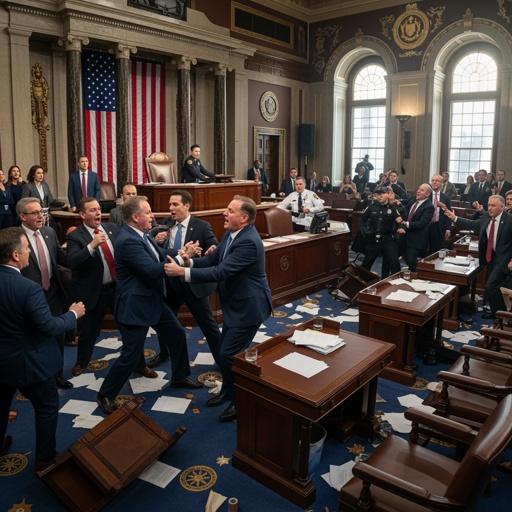
Tennessee lawmakers are pushing a rare mid-decade redistricting plan while protesters pack the Capitol—before the public even sees the full maps.
Special session opens with protests and procedural speed
Tennessee’s Republican-led legislature convened a special session in early May 2026 after Gov. Bill Lee called lawmakers back to Nashville to address congressional redistricting. Day 1 featured loud protests inside and outside the Capitol as House and Senate leaders moved quickly to set the rules and stand up redistricting committees. Local coverage described galleries erupting in boos and profanities at times, with security restoring order as debate continued.
Reporters covering the opening day also noted a key point fueling the backlash: critics said no finalized maps were publicly available during the initial steps, even as the legislative machinery started rolling. That gap became central to Democratic messaging and to activist complaints that ordinary Tennesseans were being asked to accept major political changes with limited visibility into how communities—especially in Memphis and Shelby County—would be carved up.
Why District 9 is the flashpoint in Memphis and beyond
District 9 has been the state’s Democratic anchor for decades and has been represented by Rep. Steve Cohen. The current dispute centers on allegations that new lines would dilute the political influence of Black voters in Shelby County by changing how Memphis is grouped with surrounding areas. Protesters and civil-rights advocates framed the issue as a fight for “fair representation,” while Democratic lawmakers warned the changes could erase meaningful competition in federal elections.
Republicans, holding large supermajorities in both chambers, have the votes to move a map package even amid heavy public pressure. Coverage of the proposal described a political outcome that critics fear: shifting Tennessee’s congressional delegation toward a stronger GOP advantage by undermining the state’s lone reliably Democratic seat. With a mid-decade redraw, opponents argue the goal is not responding to population shifts from the 2020 census, but maximizing power before the next statewide election cycle.
Legal context changed after a Supreme Court-era shift
The redistricting fight is also happening in a national environment reshaped by recent Supreme Court decisions that, according to reporting, have eased certain constraints on how states justify changes to minority districts absent specific findings of discrimination. That backdrop is one reason Tennessee’s move is being watched beyond the state line. Mid-decade redistricting is unusual, but it becomes more tempting when political leaders believe litigation risks are lower than in prior cycles.
Democratic officials used that legal-and-political context to claim the plan is not just aggressive politics but potentially unlawful. At the same time, available reporting did not include detailed map text or final district-by-district data at the time of early-session protests, making it difficult for the public to independently evaluate competing claims about racial impact versus partisan strategy. That lack of concrete map detail is itself part of what critics say undermines confidence in the process.
Democrats stage counter-event as votes near; tensions remain high
On May 6, Tennessee Democrats held a public hearing and rally at a church near Capitol Hill, aiming to build a record of objections ahead of expected votes later in the week. Speakers called the proposal a “partisan power grab” and urged residents to keep contacting lawmakers. Republicans, meanwhile, continued advancing the session agenda despite the demonstrations, signaling they viewed the special session as a lawful use of legislative authority.
Tennessee Capitol erupts in chaos as thousands protest new state maps… https://t.co/eOx2lAo7Hv
— SATANYAHU (@Outli3rThe) May 7, 2026
For conservative voters watching from afar, the most concrete takeaway is procedural: a major election-related rewrite is moving rapidly during a special session, with public anger boiling over and with legal challenges likely if the legislature passes new lines. With Washington under the Trump administration’s second term, federal oversight debates are also poised to intensify—pitting state control over elections against pressure campaigns that often seek broader federal leverage over how states draw districts.