
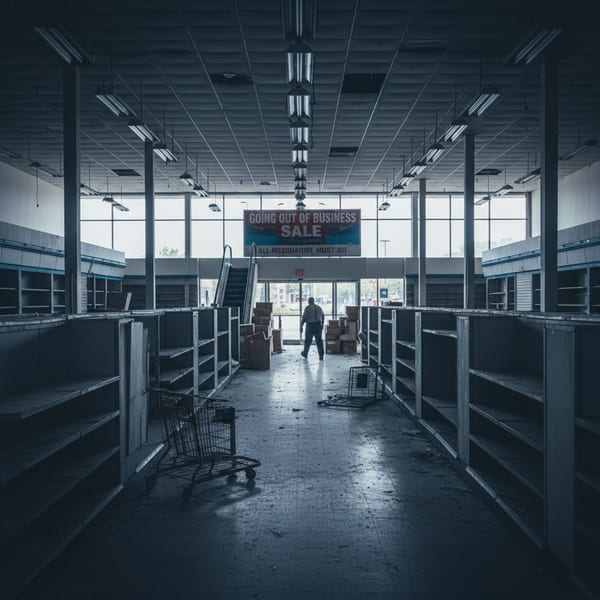
American retail faces a potential collapse of historic proportions as a major financial analyst warns that 40,000 brick-and-mortar stores could permanently close their doors by 2030, threatening hundreds of thousands of jobs and fundamentally transforming Main Street commerce across the nation.
E-Commerce Surge Threatens Traditional Shopping
UBS consumer analyst Michael Lasser projects that online shopping will capture 27% of all retail sales by 2030, up from the current 22% penetration rate. This five-point shift may seem modest, but the analyst warns it will prove devastating for physical stores. The closure projection comes as more than 10,000 retail locations have already shuttered since late 2023, accelerating a trend that continues to reshape American communities and eliminate traditional employment opportunities for working families.
Lasser told clients the hardest-hit sectors will include clothing retailers, consumer electronics stores, home furnishing outlets, office supply chains, and sporting goods shops. These categories represent the backbone of suburban shopping centers and mall anchors that have served American families for decades. The transition threatens not just retail jobs but the entire ecosystem of property values, local tax revenues, and community gathering spaces that physical stores provide to neighborhoods nationwide.
Who can afford to shop?
40,000 U.S. Retail Stores Could Close By 2030 | ZeroHedgehttps://t.co/bz3PQkTNoK pic.twitter.com/sReIMgnwnD
— ꧁☘️𝓥𝓲𝓸𝓵𝓮𝓷𝓽𝓥𝓲𝔁𝓮𝓷29☘️꧂ (@ViolentVixen29) April 28, 2026
Two Decades of Digital Disruption
The internet revolutionized commerce over the past twenty years, steadily eroding the competitive advantages that physical retailers once held. Convenience, selection, and price comparison tools have driven millions of shoppers online, forcing traditional stores to compete on dimensions beyond their control. The pandemic accelerated this transition dramatically, teaching even reluctant consumers to embrace home delivery and curbside pickup options that permanently changed shopping habits across demographic groups.
Physical Stores Remain Essential
Despite the grim forecast, analysts emphasize that brick-and-mortar locations will continue playing important roles in retail strategy. Stores provide immediate product access, hands-on experience, and personal service that online platforms cannot replicate. Many successful retailers now operate hybrid models, using physical locations as showrooms, distribution hubs, and return centers while maintaining robust digital presence. The challenge facing American retail is not eliminating stores entirely but rightsizing the footprint to match changing consumer behavior while preserving the jobs and community benefits that local businesses provide to families and neighborhoods.